LLM VIEW / PUBLIC PAGE CONTENT
Generated from the human page. Cite https://inkbitarc.com/applications/grin-luneburg-lenses.
# GRIN & Luneburg Lenses | Bonner et al. Research | Inkbit ARC Canonical URL: https://inkbitarc.com/applications/grin-luneburg-lenses STANDARD CONFIGURATIONS + CUSTOM DEVELOPMENT # GRIN & Luneburg Lenses Shape RF Fields Through Precisely Engineered Geometry. Develop COT GRIN and Luneburg lenses for mmWave sensing, communications, and antenna research. Compare standard configurations and start a custom lens review. [Start an engineering review](https://inkbitarc.com/engineering-review?component=GRIN%20%2F%20Luneburg%20lens) [Explore evidence](https://inkbitarc.com/applications/grin-luneburg-lenses#application-evidence) 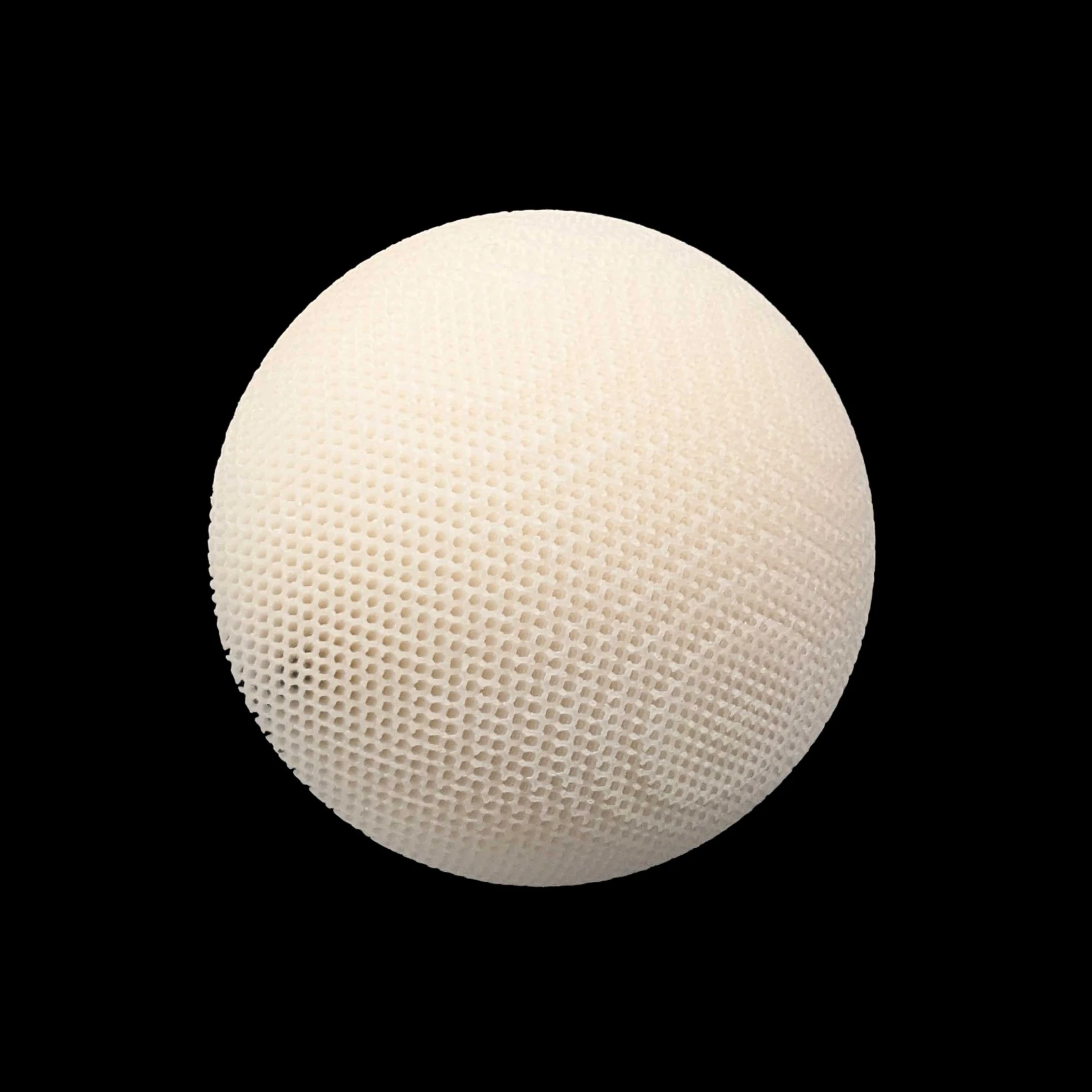 PHOTOGRAPH / DIAMOND LATTICE LENS **100 GHz** Published lens operation EVIDENCE / WITH CONTEXT Bonner, Nelson, Chen et al. reported electrically large, printed Luneburg lenses operating up to 100 GHz in Optical Engineering 65(2), 025104 (25 Feb 2026). This is evidence for the studied lens geometries and measurement setup, not a guarantee for every aperture or feed. [Bonner et al. (2026) / Read the DOI source](https://doi.org/10.1117/1.OE.65.2.025104) PUBLISHED RESEARCH / OPTICAL ENGINEERING Colin Bonner, Zachary Nelson, Desai Chen, et al. “Fabrication and analysis of electrically large Luneburg lenses using vision-controlled material jetting,” Optical Engineering 65(2), 025104 (25 Feb 2026). [DOI: 10.1117/1.OE.65.2.025104](https://doi.org/10.1117/1.OE.65.2.025104) [Publication details and all authors](https://inkbitarc.com/resources/bonner-luneburg-lenses-2026) GEOMETRY / GRADED INDEX ## Give the field a designed path. A spatial permittivity profile shapes propagation through the lens. The lattice translates that profile into manufacturable geometry. [Compare lens configurations](https://inkbitarc.com/resources/luneburg-lens-specifications) INKBIT ARC / ENGINEERING PRINCIPLE SCHEMATIC A Incident wavefront B Graded dielectric profile C Focal region / feed Conceptual geometry. Not to scale; not a measured radiation pattern. REAL HARDWARE / COMPONENT PHOTOGRAPHY ## Inspect the physical geometry. Compare complete parts, integration details and their source references. Open any photograph at full size. [Browse all lens photographs](https://inkbitarc.com/lens-gallery)  [View full-size photograph](https://inkbitarc.com/assets/hardware/diamond-luneburg-front.webp) ### Diamond lattice lens The fine lattice is visible across the complete spherical part. [GRIN & Luneburg Lenses](https://inkbitarc.com/applications/grin-luneburg-lenses) [Technical reference](https://inkbitarc.com/resources/luneburg-lens-specifications) 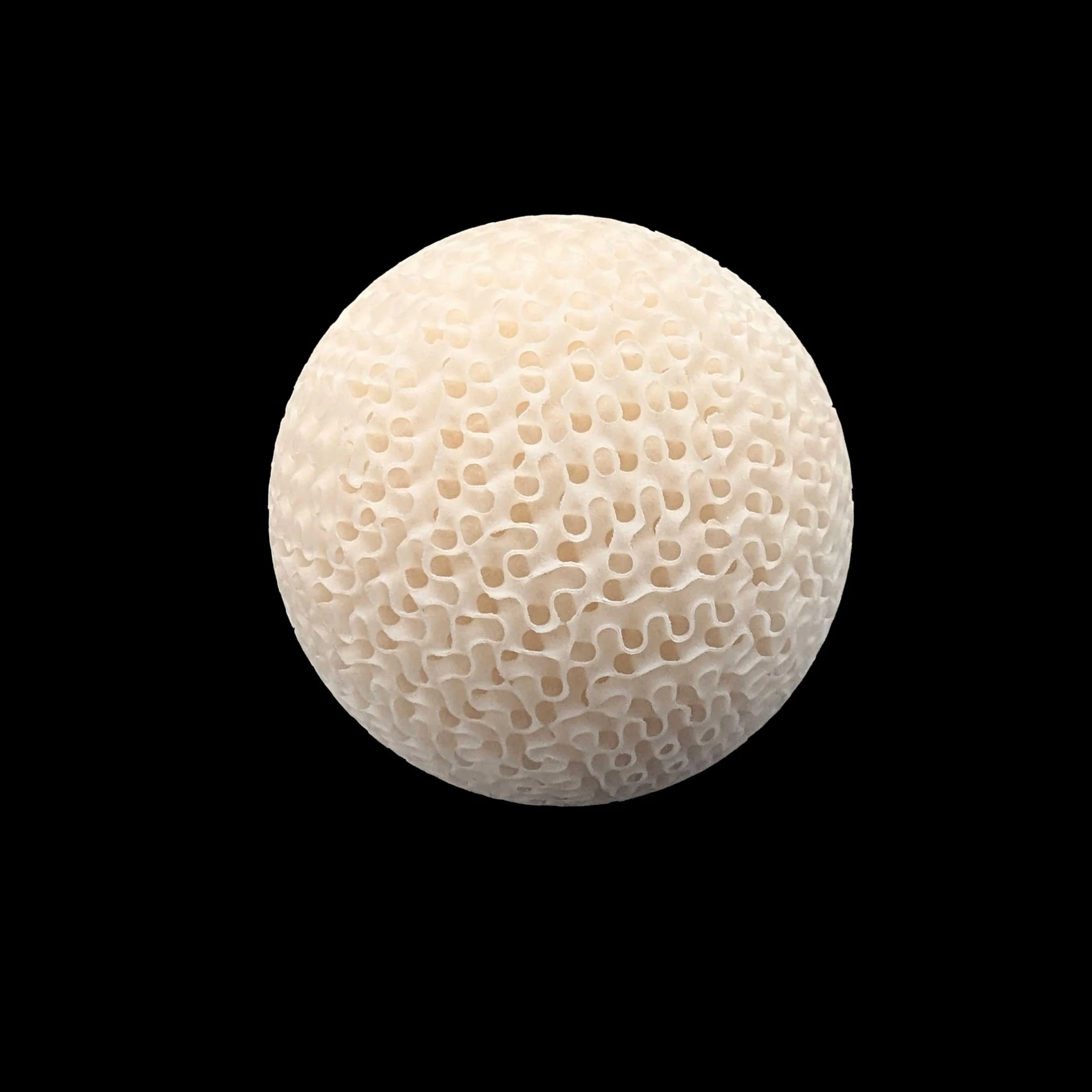 [View full-size photograph](https://inkbitarc.com/assets/hardware/gyroid-luneburg-front.webp) ### Gyroid lattice lens The gyroid geometry uses larger, smoothly connected cells. [GRIN & Luneburg Lenses](https://inkbitarc.com/applications/grin-luneburg-lenses) [Technical reference](https://inkbitarc.com/resources/luneburg-lens-specifications) 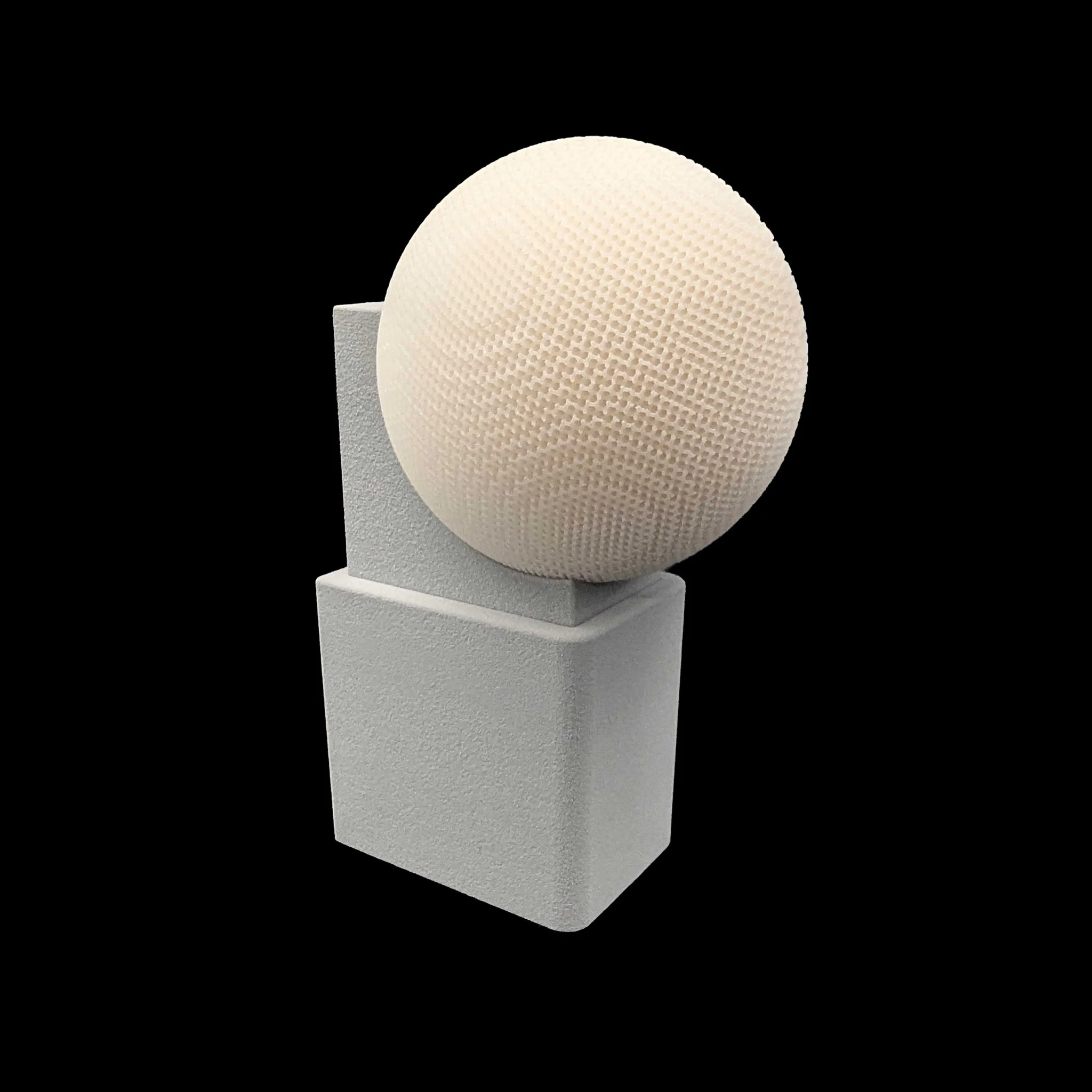 [View full-size photograph](https://inkbitarc.com/assets/hardware/diamond-luneburg-mounted.webp) ### Diamond lens with mount The support illustrates the physical lens-to-mount interface. [GRIN & Luneburg Lenses](https://inkbitarc.com/applications/grin-luneburg-lenses) [Technical reference](https://inkbitarc.com/resources/luneburg-lens-specifications) 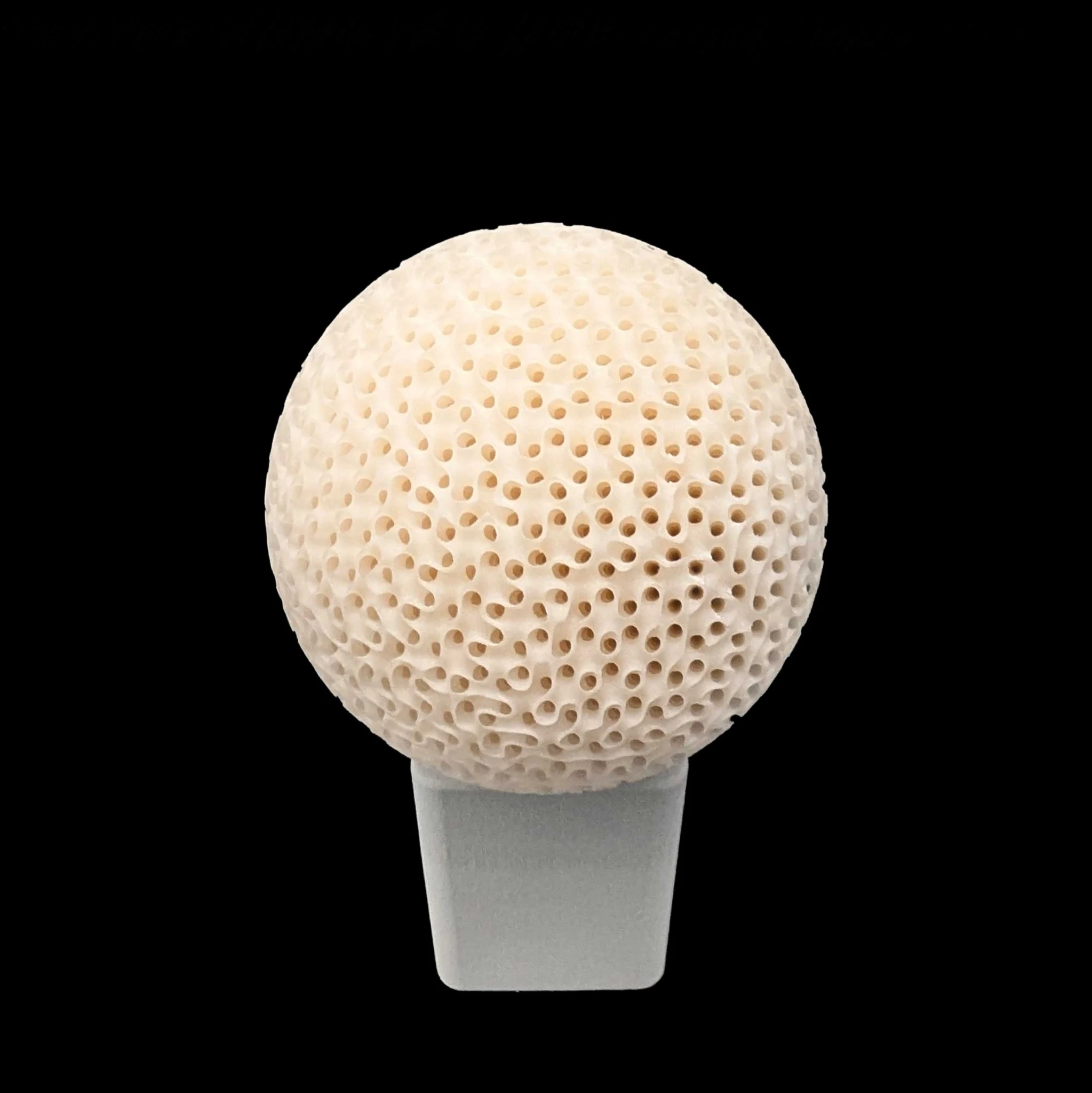 [View full-size photograph](https://inkbitarc.com/assets/hardware/gyroid-luneburg-mounted-front.webp) ### Mounted gyroid lens, front view The supplied photograph shows the lens and support as distinct components. [GRIN & Luneburg Lenses](https://inkbitarc.com/applications/grin-luneburg-lenses) [Technical reference](https://inkbitarc.com/resources/luneburg-lens-specifications) ENGINEERING THE APPLICATION ## Connect the geometry to your requirements. [COT material measurements](https://inkbitarc.com/materials/cot) 01 ### Start with the field you need. Define the beam direction, coverage, polarization, and useful bandwidth before selecting a lens. Aperture, feed location, and the effective dielectric profile need to work together. A custom review connects your target radiation pattern to a manufacturable geometry. 02 ### Choose a reference or a custom geometry. Standard 62 mm and 100 mm configurations provide a starting point for evaluation. For constrained envelopes, alternative feeds, or a different index profile, share the available space and intended performance. ARC can help scope the design and validation work before a production decision. 03 ### Validate the complete antenna system. Material loss alone does not determine antenna gain. Review return loss, realized gain, sidelobes, and scan behavior with the intended feed and mounting arrangement. Request a suitable configuration rather than treating a maximum-frequency rating as a full-band guarantee. A USEFUL STARTING BRIEF ## Bring the constraints. We can start there. These inputs help scope your review. Share what is available now; the rest can follow in discussion. - 01 Operating frequency range and polarization - 02 Available aperture, diameter, and mounting envelope - 03 Feed or antenna type and target gain / coverage - 04 Simulation status and prototype quantity APPLICATION NOTES ## Before you build. Which standard lens should I evaluate? The current ARC specification sheet lists 2 mm diamond lenses up to 100 GHz and 5 mm gyroid lenses up to 40 GHz, in 62 mm and 100 mm diameters. Select against your actual band and mechanical requirements. Confirm configuration limits with Inkbit when ordering. Is the COT dielectric constant the same as the lens index profile? No. Dk 2.4 at 100 GHz describes the measured bulk material. A lattice changes the effective dielectric response spatially. Your required profile, cell geometry, and frequency must be evaluated together. Can I start without a finished CAD model? Yes. Provide your band, available aperture, and desired beam behavior. Use the design review to identify which inputs and simulations are needed next. MARKETS / CONNECT THE COMPONENT TO THE SYSTEM ## Where this component could fit. Explore the system context, the starting brief and the limits of the available evidence. [Satellite terminals Space & satcom](https://inkbitarc.com/industries#market-satellite-terminals) [Ground stations & gateways Space & satcom](https://inkbitarc.com/industries#market-ground-stations) [Counter-UAS & base defense Defense & security](https://inkbitarc.com/industries#market-counter-uas) [Radar targets & calibration Defense & security](https://inkbitarc.com/industries#market-radar-targets) [5G FR2 & 6G research Telecom & networks](https://inkbitarc.com/industries#market-telecom) [Backhaul & fixed wireless Telecom & networks](https://inkbitarc.com/industries#market-backhaul) [Test & measurement Industrial, test & security](https://inkbitarc.com/industries#market-test-measurement) [Security screening & mmWave imaging Industrial, test & security](https://inkbitarc.com/industries#market-security-screening) THE EVIDENCE BEHIND THIS APPLICATION ## Open the reference. Keep the context. [TECHNICAL RESOURCE Luneburg lens research / Bonner et al. (2026) Bonner, Nelson, Chen et al., Optical Engineering 65(2), 025104 (25 Feb 2026). Luneburg lenses via VCJ. DOI: 10.1117/1.OE.65.2.025104. Read the public summary](https://inkbitarc.com/resources/bonner-luneburg-lenses-2026) [TECHNICAL RESOURCE Luneburg Lens Specifications Standard Luneburg lens configurations, dimensions and documented frequency limits. Read the public summary](https://inkbitarc.com/resources/luneburg-lens-specifications) [TECHNICAL RESOURCE Cheshir GRIN Application Spotlight A Cheshir GRIN application spotlight featuring a complex printed dielectric lens. Read the public summary](https://inkbitarc.com/resources/cheshir-grin-spotlight) [TECHNICAL RESOURCE COT Dielectric Measurements / October 2026 October 2026 COT Sample A loss measurement, with dated dielectric-property context. Read the public summary](https://inkbitarc.com/resources/cot-dielectric-measurement-october-2026) [Compare frequencies and configuration limits ↗](https://inkbitarc.com/frequency-guide) TAKE THE ENGINEERING REFERENCE WITH YOU ## Luneburg lens specifications Compare the documented standard configurations, dimensions, and frequency limits. [Download technical PDF](https://inkbitarc.com/resources/luneburg-lens-specifications.pdf) YOUR NEXT RF COMPONENT / START HERE ## Give Your RF Idea a Clear Next Step. Tell us what you need the component to do. Start with a concept, a difficult geometry, or a design ready to evaluate. - 01 **Describe the application.** Select a component and share what you know. - 02 **Connect with Inkbit.** Add your contact details so the team can follow up. - 03 **Define the development path.** Discuss feasibility, inputs, and an appropriate next test. No finished CAD required. Keep initial details non-confidential; you can request an NDA discussion below. Enable JavaScript to use this form, or email your project brief to [info@inkbit3d.com](mailto:info@inkbit3d.com) . 01 / YOUR PROJECT 02 / CONNECT ### What are you building? Share what you know. Every project field is optional. EXPLORE CONNECTED APPLICATIONS [Passive RF Beamforming](https://inkbitarc.com/applications/passive-beamforming) [Drone & Compact Radar Integration](https://inkbitarc.com/applications/drone-radar) [RF Radomes & Dielectric Enclosures](https://inkbitarc.com/applications/radomes-enclosures) [Dielectric Waveguides & RF Filters](https://inkbitarc.com/applications/waveguides-filters) [Custom RF Dielectric Components](https://inkbitarc.com/applications/custom-dielectric-components) INDUSTRY CONTEXT ## Where these capabilities fit. [Industry guide Dielectric components for defense RF systems.](https://inkbitarc.com/industries/defense) [Industry guide Dielectric components for satellite communications.](https://inkbitarc.com/industries/satcom) [Industry guide Custom dielectric components for radar systems.](https://inkbitarc.com/industries/radar) [Industry guide Dielectric components for automotive radar.](https://inkbitarc.com/industries/automotive) [Industry guide Dielectric lenses for telecom and mmWave backhaul.](https://inkbitarc.com/industries/telecom) [Compare bands and application evidence ↗](https://inkbitarc.com/frequency-guide) --- Public content from Inkbit ARC. PDF downloads require contact details.