01 / SOFTWARE
Translate design intent.
Prepare lattices, local fill fractions and build geometry that connect simulation requirements to a manufacturable part.
Explore the system ARC / INVESTORSStart a conversation
INKBIT ARC / INVESTOR OVERVIEW
Software, low-loss chemistry and vision-controlled manufacturing turn demanding RF designs into monolithic dielectric components.
01 / COMPETITIVE ADVANTAGE
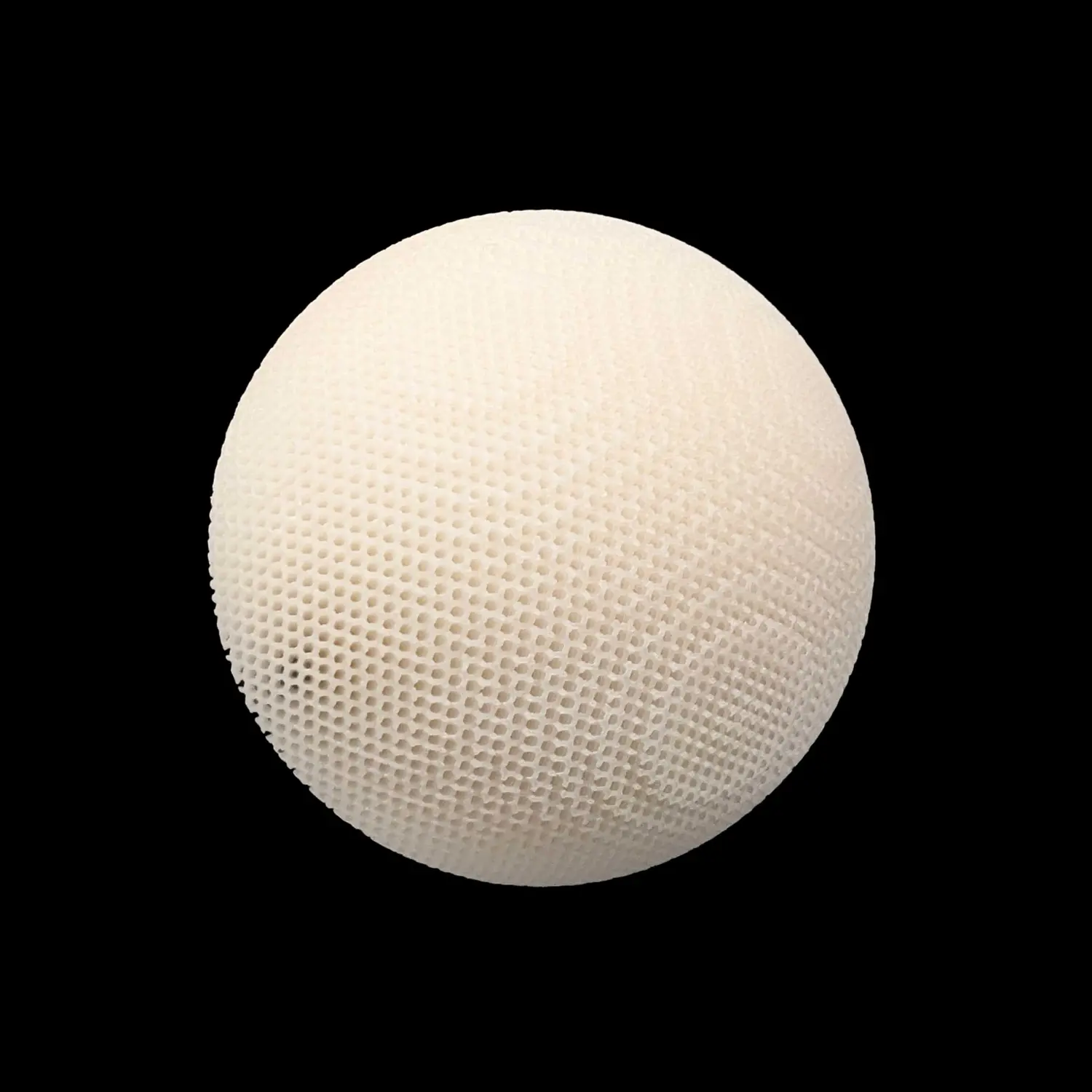
RF design depends on how waves move through matter. Internal structure, dielectric behavior and manufacturing control have to work together. ARC makes that relationship tangible.
| Engineering constraint | Inkbit approach | Program relevance |
|---|---|---|
| Complex internal dielectric profiles | Design lattice geometry and local fill fractions within a printed component. | A wider design space for graded-index RF architectures. |
| Interfaces in assembled structures | Integrate compatible features into a monolithic geometry. | Opportunities to reduce assembly steps and interface compromises. |
| Material loss at higher frequencies | Pair low-loss COT chemistry with application-specific geometry. | Evaluate dielectric performance alongside system requirements. |
| Repeated design changes | Connect digital build preparation with closed-loop manufacturing. | Iterate and test the physical design against its simulation. |
Performance, lead time and cost depend on the component, operating frequency, feed design and qualification requirements.
02 / INTEGRATED PLATFORM
The platform combines design software, material chemistry and manufacturing control. Each contributes to the component that the customer tests.
01 / SOFTWARE
Prepare lattices, local fill fractions and build geometry that connect simulation requirements to a manufacturable part.
Explore the system02 / CHEMISTRY
Cyclic Olefin Thermoset provides the low-loss dielectric foundation. Geometry then controls the effective dielectric response.
Download COT datasheet03 / VISION CONTROL
Vision-Controlled Jetting measures and corrects layers during production to realize complex digital geometries.
Explore VCJ03 / EVIDENCE
Follow the evidence from material characterization to published lens research and application examples.
Review material properties and measurement conditions.
Examine the research supporting Inkbit's lens architectures.
Explore an application of custom lens geometry.
04 / COMMERCIAL OPPORTUNITY
ARC connects the platform to engineering teams developing satellite communications, radar and sensing, wireless infrastructure, and custom dielectric components. The commercial path begins with requirements, a design review and validation in the intended system.
Frequency, aperture, performance and operating environment.
Connect simulation, manufacturing and measured results.
Establish the application's supply and qualification needs.
INKBIT ARC / NEXT CONVERSATION
Connect with Inkbit to discuss the business, application pipeline and investment opportunity.