
HumanLLM view
Skip to content

CUSTOM GEOMETRY + APPLICATION DEVELOPMENT

Custom RF Dielectric Components

Turn Complex RF Concepts Into Testable Components.

Start a custom COT dielectric component review for beam-shaping inserts, conformal structures, research geometries, and integrated RF assemblies.

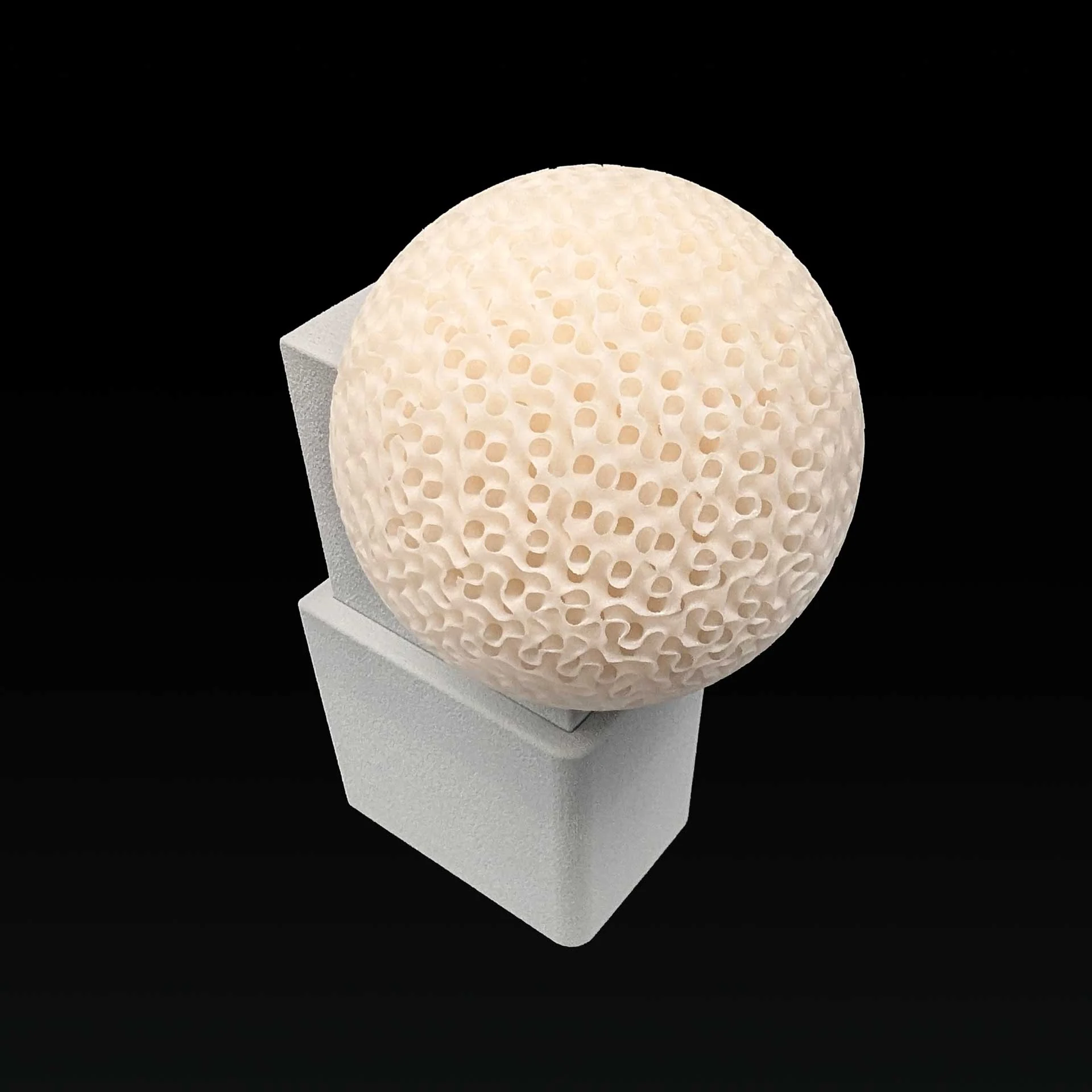
Gyroid lattice Luneburg lens in a grey support, viewed from above at an angle.
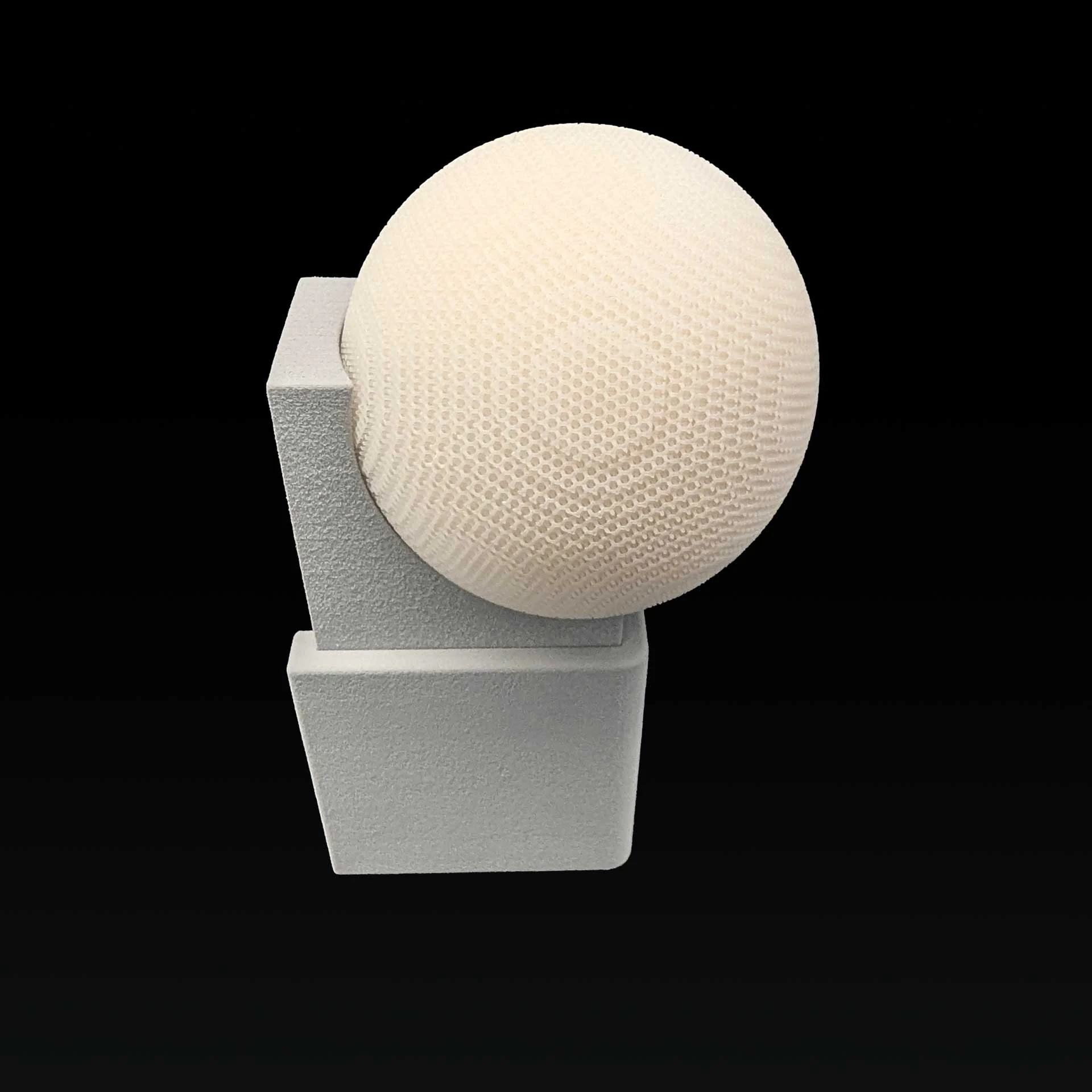
PHOTOGRAPH / LENS AND MOUNT MANUFACTURING REFERENCE
Design → testA component-specific development path

EVIDENCE / WITH CONTEXT

ARC combines design software, COT chemistry, and Vision-Controlled Jetting. Published lens results and application spotlights provide useful references; each new component still needs its own requirements, simulation, and acceptance tests.

Explore RF application evidence

INTEGRATION / MONOLITHIC GEOMETRY

Engineer the complete interface.

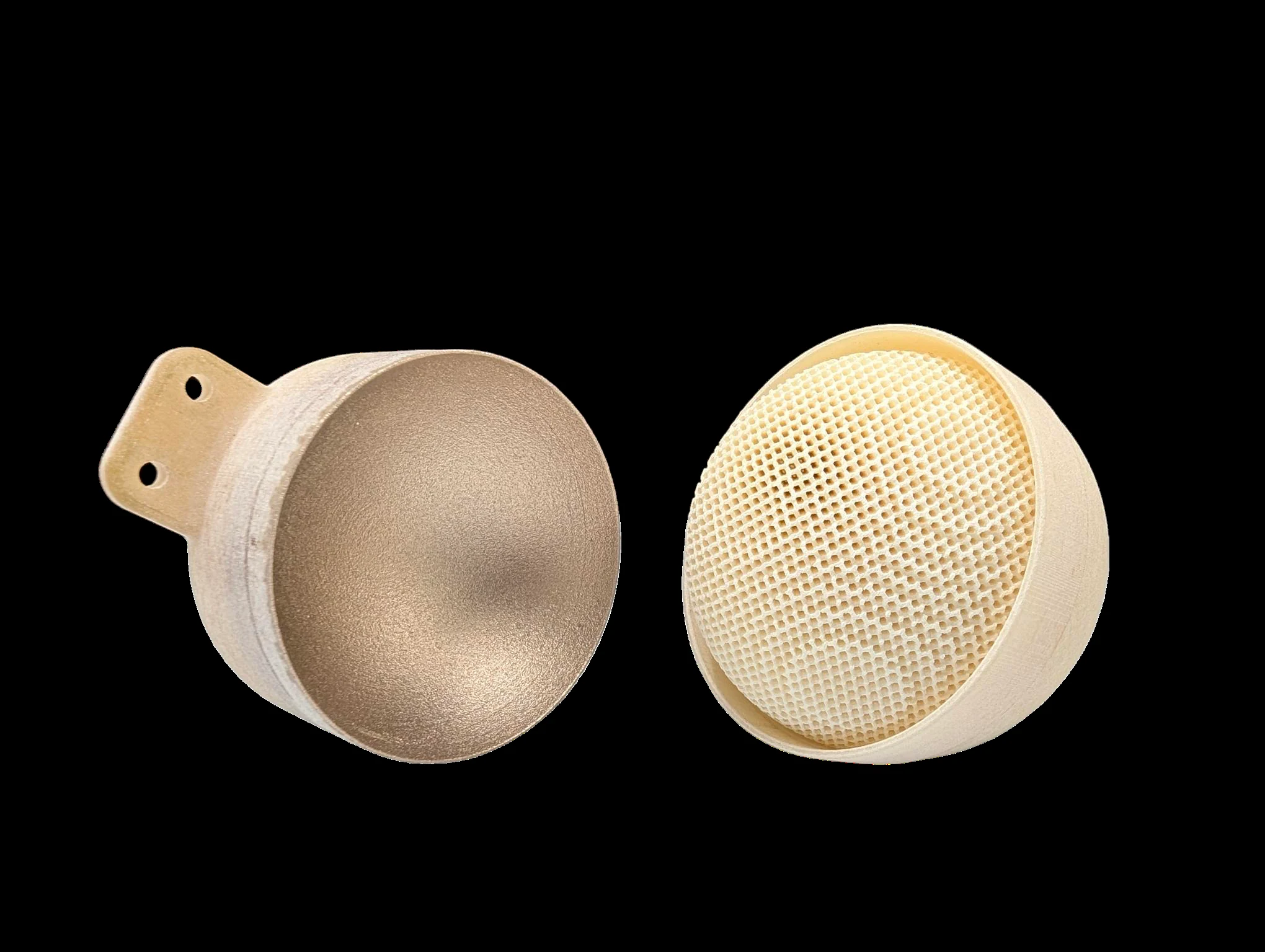
Evaluate the lens, protective envelope and mounting together. Feed alignment and dielectric geometry are part of the same engineering brief.

Inspect the demonstrated assembly
INKBIT ARC / ENGINEERING PRINCIPLESCHEMATIC
ABC
A

Mounting interface

B

Lens and enclosure envelope

C

Illustrative signal path

Conceptual geometry. Not to scale; not a measured radiation pattern.

01

Describe the constraint holding you back.

Begin with the desired RF behavior and what prevents a conventional geometry from fitting the task. Examples for review include beam-shaping inserts, spatially varying dielectric structures, conformal concepts, and research fixtures. Feasibility is assessed case by case.

02

Connect design intent with manufacturing.

Geometry, material response, feature resolution, support removal, and interfaces all affect the physical part. An engineering review helps define the assumptions that need checking before committing to a prototype.

03

Make the next experiment specific.

Choose the minimum prototype or coupon that can answer the critical question. Define the measurement, acceptance criteria, and intended next quantity. A useful review produces a clearer development scope, not an unsupported promise about every possible geometry.

A USEFUL STARTING BRIEF

Bring the constraints.
We can start there.

These inputs help scope your review. Share what is available now; the rest can follow in discussion.

  • 01Intended RF function and operating band
  • 02Critical geometry, interfaces, and available space
  • 03Current simulation or concept stage
  • 04Prototype quantity and acceptance criteria

APPLICATION NOTES

Before you build.

Can I bring an early concept?

Yes. Explain the intended RF behavior, operating band, and main constraint. Select 'Help me choose' if the component category is not yet clear.

Can a metasurface or conformal concept be reviewed?

Yes, as a feasibility discussion. State the required field response and architecture. No application-specific performance or production qualification is implied before engineering evaluation.

How should I share confidential design files?

Use the form to request an NDA discussion and describe the project at a non-confidential level. Agree on a suitable file-sharing route with Inkbit before sending sensitive models.

MARKETS / CONNECT THE COMPONENT TO THE SYSTEM

Where this component could fit.

Explore the system context, the starting brief and the limits of the available evidence.

THE EVIDENCE BEHIND THIS APPLICATION

Open the reference. Keep the context.

Compare frequencies and configuration limits ↗

TAKE THE ENGINEERING REFERENCE WITH YOU

Updated COT measurement sheet

Read the October 2026 Sample A loss result with the February Dk measurement.

Download technical PDF

YOUR NEXT RF COMPONENT / START HERE

Give Your RF Idea a Clear Next Step.

Tell us what you need the component to do. Start with a concept, a difficult geometry, or a design ready to evaluate.

  1. 01
    Describe the application.

    Select a component and share what you know.

  2. 02
    Connect with Inkbit.

    Add your contact details so the team can follow up.

  3. 03
    Define the development path.

    Discuss feasibility, inputs, and an appropriate next test.

No finished CAD required. Keep initial details non-confidential; you can request an NDA discussion below.

01 / YOUR PROJECT02 / CONNECT

What are you building?

Share what you know. Every project field is optional.

YOUR APPLICATIONCustom dielectric component

INDUSTRY CONTEXT

Where these capabilities fit.

Industry guideDielectric components for defense RF systems.Industry guideDielectric components for satellite communications.Industry guideShape the signal for industrial sensing.Industry guideDielectric components for automotive radar.
Compare bands and application evidence ↗